
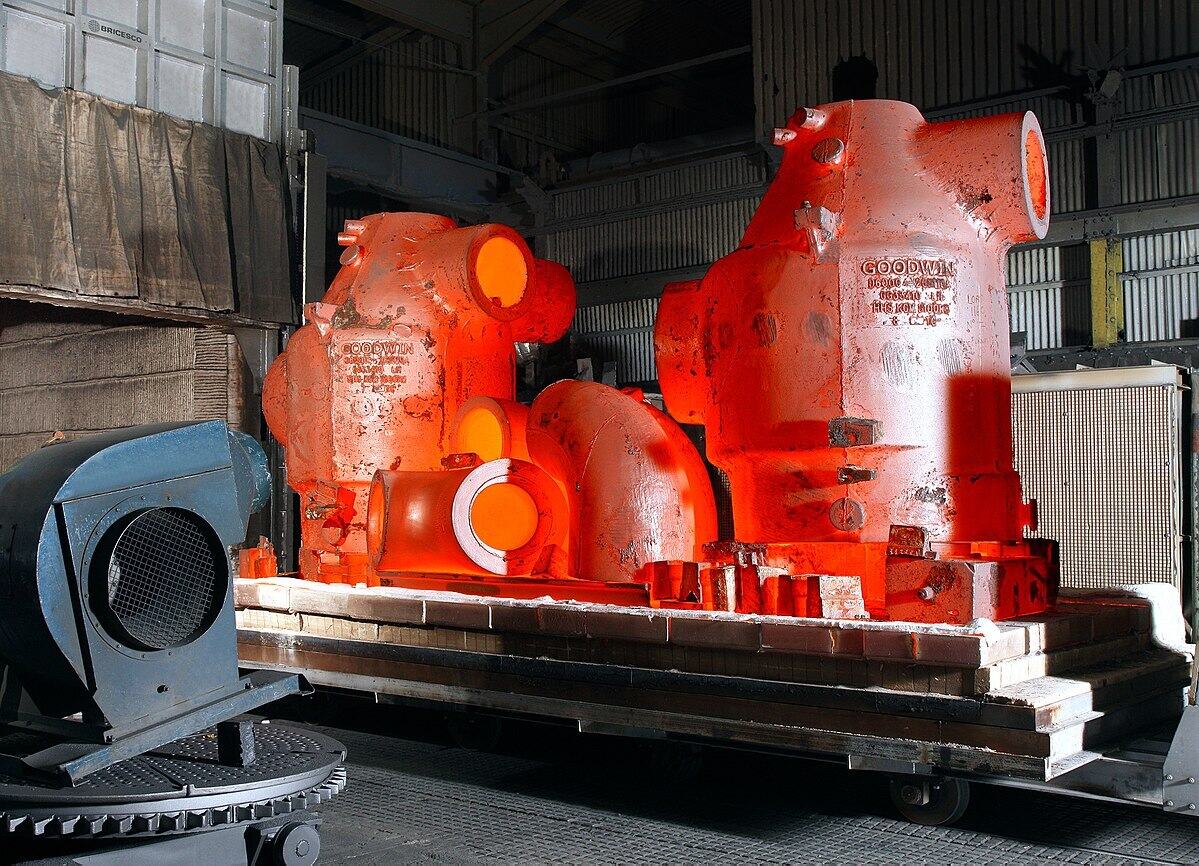
Heat treatment, also known as heat treating, is a heated metalworking process that brings metal alloys to a melting point and cools to achieve certain properties. In this article, you will learn the purpose of heat treatment, the different types of heat treatment, and the furnace types that perform heat treatment.
Purpose of Heat Treatment

Heat treatment is a vital part of processing and altering different types of metals to achieve designed mechanical characteristics. Moreover, this process alters metal properties by heating the metal to a molten stage and controlling the cooling process of the alloy to produce a desirable change in characteristics. The characteristics affected may be hardness, strength, toughness, ductility, or elasticity. Changes to these characteristics occur because heat treatment alters alloy microstructures by heating and cooling to a desired microstructure. The most commonly heat-treated material is steel as it has a vast variety of industrial applications. When steel undergoes heat treatment, microstructure orientation shifts from a softer pearlite microstructure to a much harder martensite microstructure steel. Heat treatment consists of three main stages: heating, soaking, and cooling. Alloy composition and practical application of the phase diagram determine expected results.
![Iron-carbon phase diagram [SubsTech] shows key details of heat treatment](https://www.substech.com/dokuwiki/lib/exe/fetch.php?w=&h=&cache=cache&media=iron-carbon_diagram.png)
Heating
The heating stage of heat treatment increases a metal alloy’s temperature to a specified melting point or molten stage. Heating typically occurs in large industrial-scale furnaces. Once the metal reaches the desired temperature, it is subsequently held at that temperature to achieve an even temperature throughout the entirety of the metal.

Soaking
Upon achieving the desired temperature, the metal soaks. Soaking holds a metal at the specified temperature for a specified amount of time. Soaking ensures that the heat spreads evenly to the inner core of the metal. The soaking time varies depending on the type of treatment.
Cooling
After completion of the soaking phase, the metal cools. In this stage, the final desired property of the metal is solidified. Methods of cooling depend on the desired cooling rate. For example, processes requiring rapid cooling require quenching the metal in water or brine. Air cooling or lightly dousing of the metal with coolant results in slower cooling.

Type of Heat Treatment
The rate at which heat, soaking, and cooling apply to the metal determine the type of heat treatment process. There are four basic types of heat treatment: hardening, annealing, normalizing, and tempering.
Hardening
Hardening begins when heat raises the metal above its critical temperature. The process strengthens and hardens alloys such as steel. During heating, technicians hold the metal at that elevated temperature long enough for uniform transformation, depending on the specimen’s thickness. They then quench it rapidly to shock the alloy and trap carbon atoms within high-stress microstructural configurations. As a result, the metal gains higher hardness and resists deformation more effectively.
Annealing
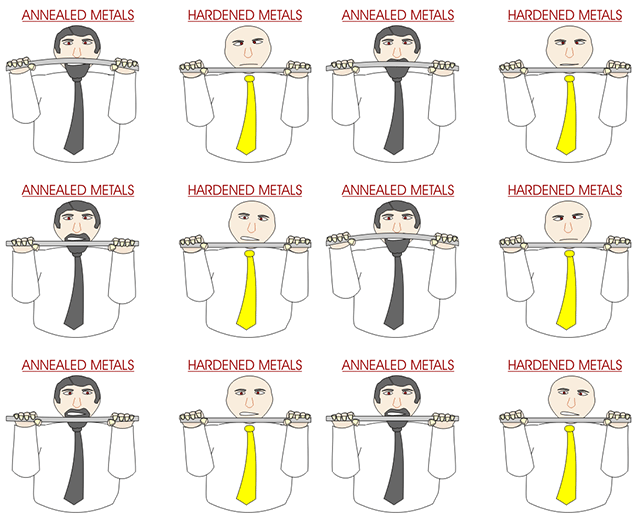
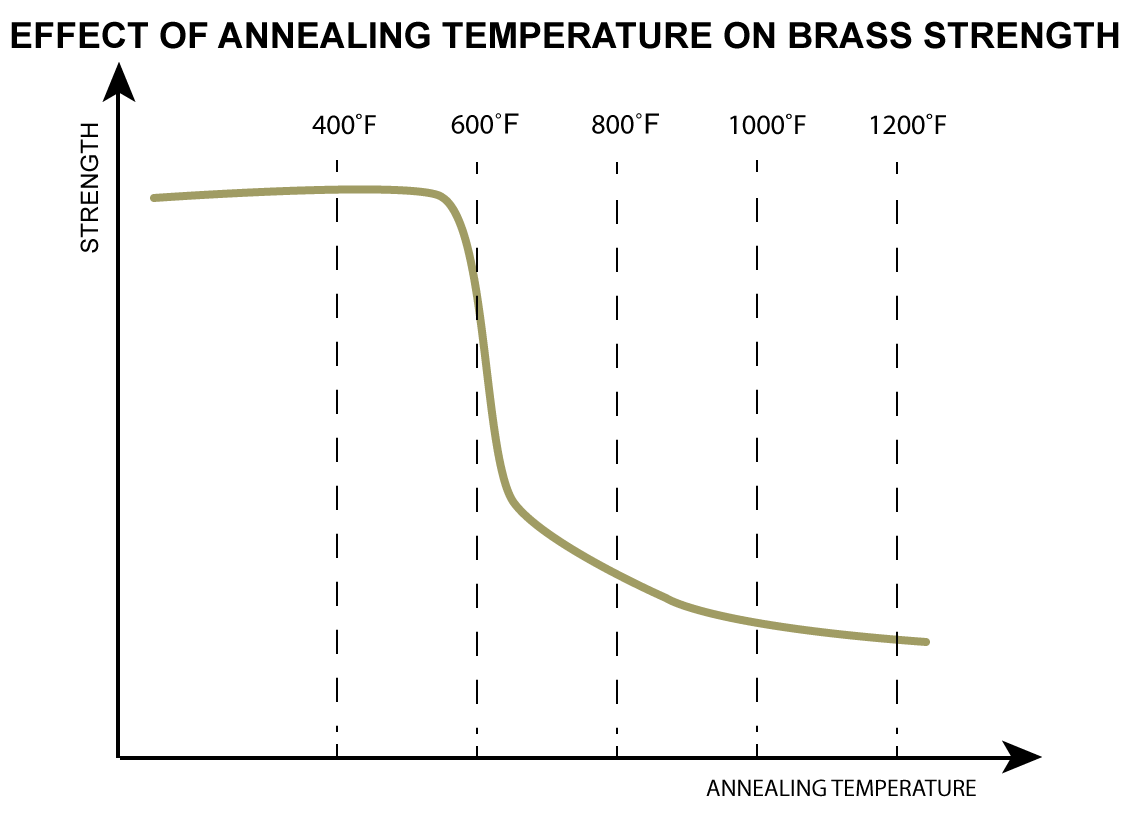
Annealing reduces the internal microstructure stress of alloy specimens. This process entails heating and soaking a metal at a temperature above the specimen’s critical point, as well as cooling in a furnace at a specified and controlled rate to dictate the ductility of the specimen. The rate of cooling is much slower than that of the hardening process as the desired outcome is a softer and refined grain structure to promote ductility. The slower the cooling, the more ductile the metal becomes.
Normalizing
Normalizing creates a more ductile and tough specimen from an already hardened alloy. This process shares characteristics with annealing because it involves heating the specimen to a temperature above a critical rate and allowing it to cool. The major difference between normalizing and annealing is that normalizing relies on air cooling at room temperature while annealing is a controlled cool that occurs in a furnace.
Tempering
After an alloy has been hardened, it often becomes extremely brittle due to internal stresses created during quenching. To relieve these stresses, metallurgists use a process called tempering, which involves reheating the hardened metal to a temperature below its critical point. During tempering, atoms such as carbon in steel diffuse within the microstructure, reducing internal stress and promoting structural balance. The metal is then air-cooled at a slower rate than quenching, allowing the formation of more stable microstructural constituents. As a result, the process slightly decreases the alloy’s hardness and strength but significantly improves its ductility and toughness.
Types of Furnaces Used in Heat Treatment
Proper heating application allows for the alteration of metal microstructure. The naturally high melting point of metal requires heavy-duty furnaces. This section covers the different types of furnaces in industrial heat treatment.
Batch Furnaces for Heat Treatment

Batch furnaces carry one load at a time. They are extremely cost-effective as they are typically smaller than higher load types of furnaces. Heating sources may be electric or gas-fired and are the basis from which many other furnaces are designed. Batch furnaces are grouped into two main types: pit furnaces and box furnaces.
Pit Furnace for Heat Treatment
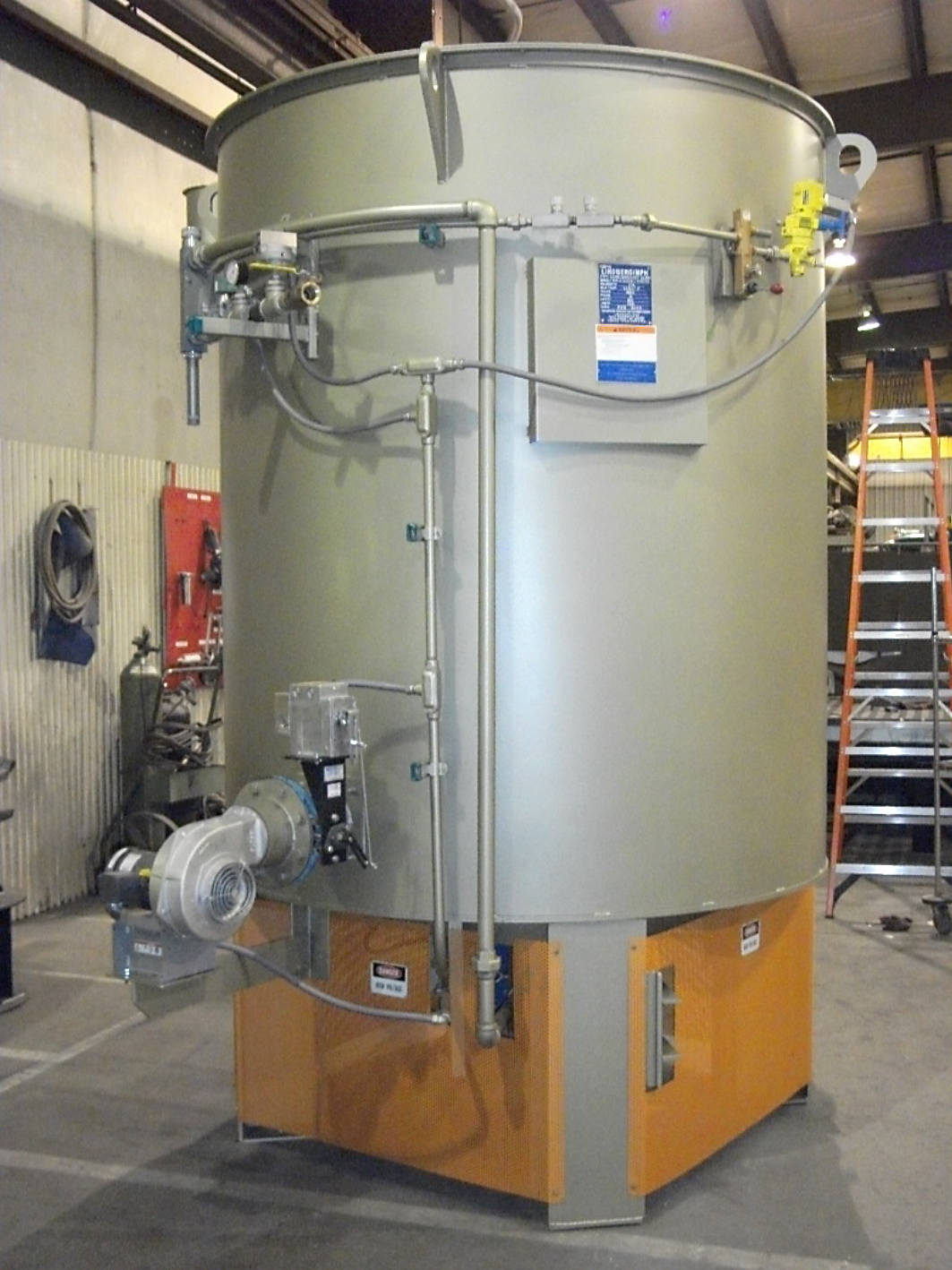
Pit furnaces, known as top loading furnaces, are a type of batch furnace. Due to their single batch and top-loading nature, they offer cost-effectiveness and ease of use. Like most other batch furnaces, gas or electric heat provides the required temperature rise.
Box Furnace

Box furnaces are also a type of batch furnace. They feature a swing or lift door at the front and heat electrically or via gas. Because of their larger design, they are ideal for larger, heavier, and hard to load specimens.
Car Bottom Furnace for Heat Treatment

Car bottom furnaces are among the largest and most expensive furnaces and load with a forklift or crane. The bottom of the furnace slides out for ease of loading. Their design optimizes for larger loads but are easy to load especially when dealing with extremely large specimen. They are typically heated through various combustion systems because they are much larger and require much more heat to evenly regulate the furnace.
Bell Furnace
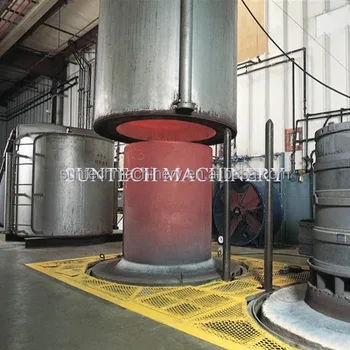
Bell furnaces represent another type of batch-operated furnace commonly used in heat treatment. In this design, a movable dome covers the workpieces, allowing the furnace to evenly heat materials. Because of this configuration, bell furnaces are especially well-suited for treating narrow strips or thin sheets that lack significant thickness. Moreover, they are typically gas-fired and serve well in smaller-scale industrial heat-treating applications where precision and uniform heating are essential.
Salt Bath Furnace for Heat Treatment
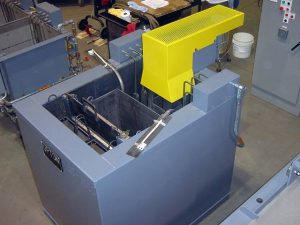
Salt bath furnaces are heated by immersing the subject in a salt fused solution which is then heated by gas fire or electrically. They are ideal for much smaller applications of heat treatment and are among the smallest of industrial grade furnaces.